
What is Japanese Highly Talented Person
The Highly Specialized Occupation Visa (Highly Talented Person Visa) is a status of residence established on April 1, 2015 in order to actively accept foreigners with highly specialized abilities. Highly-skilled foreigners are evaluated on a point system based on items such as education, work experience, and annual income, and are required to score 70 points or more, with more lenient conditions for applying for permanent residence as well as more favorable measures. In principle, you need to have been in Japan for at least 10 years to apply for permanent residence, but if you score 70 points or more, you can apply for permanent residence for at least 3 years, and if you score 80 points or more, you can apply for permanent residence for at least 1 year.
Period of stay: 5 years, permanent.
Classification of Highly Talented Individuals
The Highly Specialized Position No.1 Yi Visa (Highly Academic Research Activity) is applicable to professors, research, and education. It is mainly for research positions at universities or companies, and is represented by researchers, scientists, and university professors.
The Highly Specialized Occupation No.1 Ro visa (Highly Specialized Technical Activity) is applicable to technical, humanities, legal and accounting businesses. This visa is representative of a wide range of jobs that require specialized skills, such as doctors, lawyers, and IT engineers.
The Highly Specialized Occupation No.1ハ visa (Highly Management Activity) is applicable to business management. It is intended for operators or managers of enterprises, and the content of the activities is basically the same as that of the management visa.
The Highly Specialized Occupation No. 2 Visa is for foreigners who hold the Highly Specialized Occupation No. 1 イ, ロ, ハ and have resided in Japan for more than three years, and the restrictions on their activities have been greatly relaxed. It is a status of residence established to facilitate the acceptance of foreigners with highly specialized skills whose period of stay is unlimited.
High Talent Point System
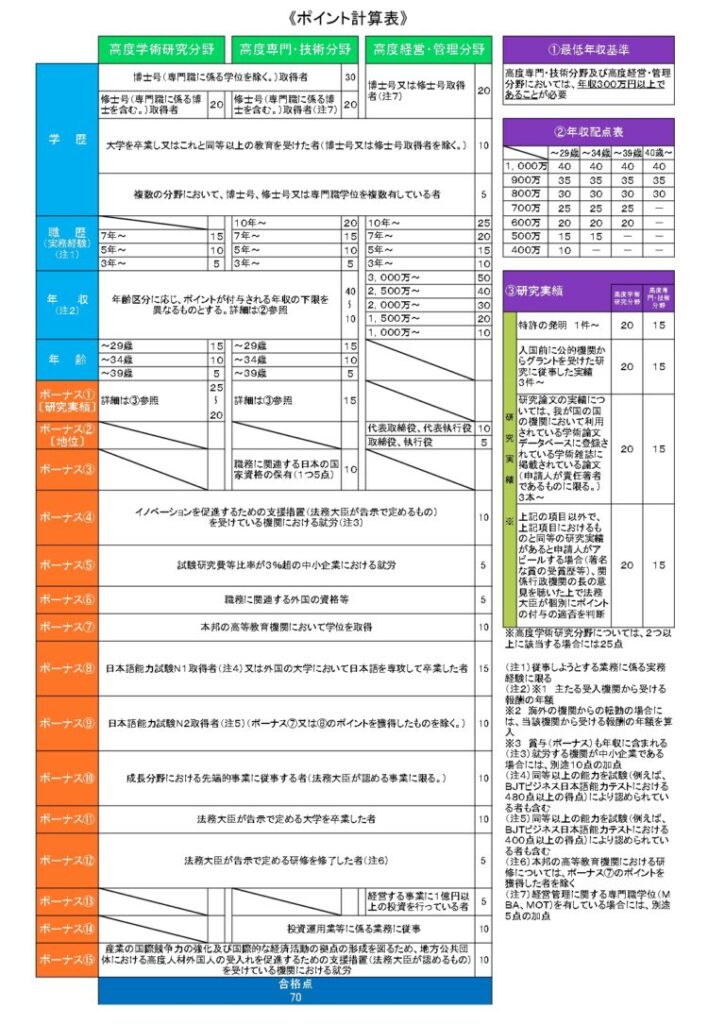
scorecard reading
1. Academic qualifications (this refers to final qualifications)
(1) Highly academic field of study
(1) Doctoral degree: 30 points
(2) Master's degree: 20 points
(3) Bachelor's degree: 10 points
(4) Master's or doctoral degree is a double degree: 5 points
2. Highly specialized technical areas
(1) Doctoral degree: 30 points
(2) Master's degree: 20 points
(3) Bachelor's degree: 10 points
(4) Master's or doctoral degree is a double degree: 5 points
3. Highly operational management areas
(1) Doctoral or Master's Degree: 20 points
(2) Bachelor's degree: 10 points
(3) Master's or doctoral degree is a double degree: 5 points
(4) MBA or MOT degree: 5 points.
*Proof of scores above are the degree and diploma, and you may be asked to provide transcripts if you want to get extra points for a dual degree.
II. Vocational Calendar
1. Highly academic fields of study
(1) More than 7 years: 15 points
(2) 5-7 years: 10 points
(3) 3-5 years: 5 points
2. Highly specialized technical areas
(1) More than 10 years: 20 points
(2) 7-10 years: 15 points
(3) 5-7 years: 10 points
(4) 3-5 years: 5 points
3. Highly operational management areas
(1) More than 10 years: 25 points
(2) 7-10 years: 20 points
(3) 5-7 years: 15 points
(4) 3-5 years: 10 points
The above scores are supported by documents that show the length of time worked and the content of the work, issued by the employing organization.
* Only experience related to your upcoming business in Japan can be accumulated: for example, if you are applying to obtain the Highly Skilled IT Engineer certification, the time you have previously worked in jobs other than IT engineering cannot be accumulated.
III. Annual income
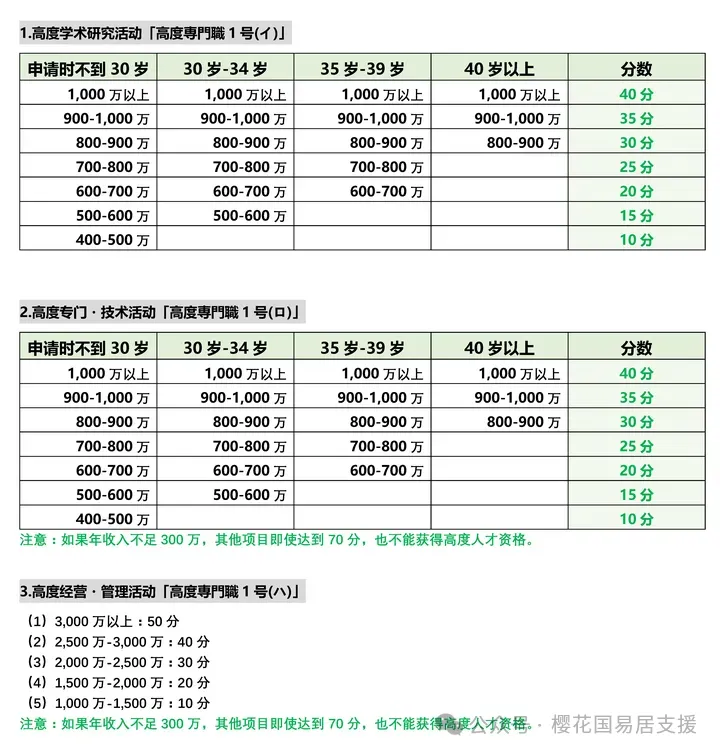
*This annual income refers to your pre-tax annual income in Japan, including basic salary and bonuses. However, it does not include accommodation allowance, dependency allowance, transportation allowance, side income, etc.
*Income under this program refers to estimated income for the coming year, not your current or past income, and this material is prepared by the employing organization.
*If you are sent to Japan from your home country, you can add your domestic income in addition to your annual Japanese income.
*No matter what the annual income is, it must be at least 3 million yen, and if it is not, you cannot apply for a Highly Qualified Person visa even if you have a total score of 70 points or more in the other items.
IV. Age at the point of application (no bonus points for this in the area of high business management)
1. Under 30 years of age: 15 points
2. 30-34 years old: 10 points
3. 35-39 years: 5 points
*This score is diminishing, so you must be aware of the relationship between birthdays and submission points after 1 year/3 years.
V. Research accomplishments (no bonus points for this in the area of high business management)
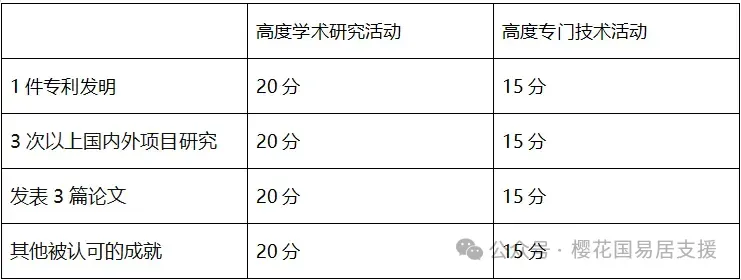
VI. QUALIFICATIONS AND STATUS (no bonus points for highly academic fields of study)
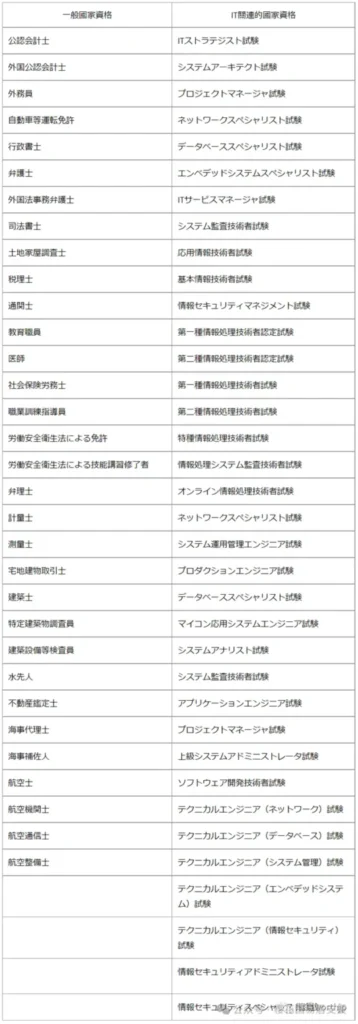
1. Highly specialized technical areas
Holding a Japanese national qualification or part of an IT qualification that is related to the content of the work to be performed in Japan will be given an additional 5 points for one of them, and 10 points for two or more.
2. Highly operational management areas
(1) Chairman and Executive Director: 10 points
(2) Directors and executive officers: 5 points
VII. Special bonus points (common to 3 categories of highly talented people)
1. Contractual institutions
(1) If the employing organization is an institution that promotes economic development support measures: 10 points
(2) If the employer is an organization that promotes economic development support measures and the company is a small or medium-sized enterprise as defined in the Small and Medium-sized Enterprises Act of Japan: 10 points.
2. Properties of contractual institutions
If the employing organization is a small or medium-sized enterprise in accordance with the Small and Medium-sized Enterprises Act of Japan, and the research expenditure is 3% or more of the sales revenue: 5 points.
3. Graduated from a Japanese university or graduate school: 10 points
4. Japanese language skills
(1) Obtained N1 certificate or scored 480 points or more on the BJT Business Japanese Language Proficiency Test: 15 points
(2) Obtaining N2 certificate or scoring 400 points or more on the BJT Business Japanese Language Proficiency Test: 10 points
*N1 and N2 scores cannot be stacked.
*Japanese university or graduate school graduates cannot get extra points even if they pass N2.
5. Engaged in apex industry: 10 points
6. Graduation institution, 1 of the following 3 major categories of schools: 10 points
①There are three lists of ranking lists of world universities by three authoritative organizations, namely QS, THE, and World University Rankings:
Attention:
*If the highly talented person is recognized before March 2019, and the graduating school is in Japan, the school will receive additional points if it appears in the top 300 of any of the 3 lists above.
*If the Highly Qualified Person recognition is after March 2019 and the graduation school is in Japan, then the school will get extra points for appearing in any of the above lists.
*If the graduating school is not in Japan and is not related to the March 2019 timeframe, then the school needs to be in the top 300 of the above 2 lists to get extra points.
②Innovative Asia Cooperative School of the Ministry of Foreign Affairs of Japan (mainly universities in Southeast Asia)
③ Super universities created by the Japanese government (all Japanese schools)
7. Special Bonus Points (specific to the field of Highly Operational Management)
Investment of 100 million yen or more: 5 points
There are many scoring items for the Highly Talented Person visa, and it is easy to miscalculate. If you don't know whether your score meets the standard, or if you have any questions about the scoring table, you are welcome to make an appointment for a detailed consultation or to obtain a plan for your own evaluation.